
Virtual points card - rules, use cases and control over points
A virtual points card is a loyalty program format where the customer keeps the card on their phone and shows it at checkout with a QR code or barcode


A Wallet card is a digital points or discount card in Apple Wallet and Google Wallet. For a business, it is not just an easy way to show a code at checkout. It is also a tool to run a loyalty program: give out cards, update data, send personalized offers and measure results. Below is what a Wallet card does for a business in practice, and which numbers to track so you judge the effect by figures, not by feelings.
One of the main effects is fewer barriers. The customer does not need to find an app, download it, update it or figure out how it works. You add the card from a link or a QR code, and it is ready to show right away.
For a business, this means:
more people sign up (more people get to the point of adding the card)
fewer people drop out at sign-up
less work for staff, because the steps are easier to explain
This is especially clear at busy locations: if sign-up takes 10-15 seconds, checkout does not slow down, and the share of people who sign up grows.
A Wallet card solves a basic task: it recognizes the customer fast. The POS system scans the barcode or QR code, and the system pulls up the profile: balance, status, available promotions, history. This means fewer cases where the customer gives their phone number, gets the digits wrong or cannot find a text message.
Day to day, this gives you:
fewer mistakes when adding and using points
fewer arguments like "I didn't get my points"
faster service at peak hours
If your CRM records why customers do not use their points (for example, the customer does not know the rules), you can use this data to improve the program mechanics and the text on the card.
The value of a digital card is that it can update. After a purchase, the points balance, tier, coupon end date and offer availability change. The customer sees current data, and the business manages the rules from one place.
This matters for two reasons:
trust in the program depends on the numbers on the card matching the numbers in the system
personalized offers only work when the customer sees them on time and in a clear way
If updates come late, this turns into constant questions and fewer people use the loyalty program. So before launch, decide which fields update at once and which can update on a schedule.
A Wallet card works well when the benefit is easy to see. On the front of the card, 2-3 key values are usually enough: points, status, a discount or coupon, plus the code to show. The customer quickly understands what exactly they will get on their next purchase.
In practice, the loyalty program comes "alive": the customer remembers it not because of a campaign, but at the moment of payment, when they open the card. This makes a repeat visit and using points more likely, which means better retention.
A chain needs the same rules and the same way of giving out cards everywhere. A Wallet card helps you make these the same:
how the customer signs up
which fields they see
which coupons and rules apply
how staff explain the program
If the card is connected to your CRM and POS system, you can see stats for each location: where more people sign up, where points are used more often, where there are many mistakes. This turns loyalty into a process you can manage, not a mix of separate practices.
To see results faster, businesses usually start with simple and clear mechanics. Examples of use cases that fit a Wallet card well:
A welcome offer after the card is added: points or a discount on the next visit, for a limited time
Cashback in points: points are added after a purchase and can pay part of a check, with clear rules
Tiers: status and perks based on spend or visit frequency, with the status shown on the card
A personal coupon: an offer for a segment (for example, "hasn't come in for a while", "often buys a certain category")
Gift cards: value, end date, code and rules of use
The idea is that the customer does not have to "remember" how it works, but sees it on the card at the moment they decide.
To understand what a Wallet card does for a business, look not only at how the customer base grows, but also at how the card is used. A working set of metrics looks like this:
Sign-up metrics
card add rate (from page visitors or QR scans to people who added the card)
share of new customers who added the card
cost of a sign-up for each channel (checkout, website, campaign, social media) - not tied to price, just to compare how well each works
Activation metrics
share of customers who made a purchase with the card after adding it
time to first use (how many days from adding the card to using it)
share of customers whose points are added correctly (without fixes by hand)
Usage metrics
how often the card is shown at checkout
share of purchases where points are used (if you allow this)
share of purchases with coupons
average check and visit frequency of members vs. non-members (compared fairly by segment)
Retention metrics
repeat visits by cohort (for example, 7/30/60 days)
"lapsed" customers who come back after a personalized offer
LTV for segments where the card is used regularly
It also helps to track operating numbers: average service time at checkout, number of loyalty questions to support, share of disputed points. These are quick signs of how well everything is set up.
For the numbers to show what really happens, agree on a few things in advance:
one customer ID (card code, phone number or another key) and no duplicates
recording of events: card added, purchase, points added, points used, return, coupon given
rules for updating card fields and how much delay is OK
clear rules for points and discounts that you can show briefly on the card itself
staff training on the basic steps: how to sign a customer up, how to add points, how to use them, what to do if there is a mistake
Without this, the program may bring traffic and a customer base, but not results you can manage.
What does a Wallet card do for a business compared to a plastic card?
It is faster to add, easier to give out, and it can update. The customer sees current points and coupons, and the business gets more data on how the card is really used.
Can you run a loyalty program on Wallet cards only, without an app?
Yes. For many formats (cafes, services, small chains) this is enough: recognizing the customer, points, coupons, tiers. An app makes sense when you need more features.
Which numbers matter most in the first 2-4 weeks after launch?
Card add rate, share of activated customers (first purchase with the card), how often the card is shown at checkout and share of purchases with points or coupons. These metrics quickly show if there is "friction" in the process.
Why do customers add the card but then not use it?
Common reasons: the benefit is not clear, the rules are hard, there is no clear welcome offer, the steps at checkout are awkward, updates come late. You fix this by making the mechanics simpler and adjusting the card fields.
Can you make personalized offers with a Wallet card?
Yes. If your CRM supports segments and triggers, the card can show a personal coupon, its end date and terms, and update them based on events.
A virtual points card is a loyalty program format where the customer keeps the card on their phone and shows it at checkout with a QR code or barcode

A virtual discount card is a digital card in Apple Wallet or Google Wallet that gives the customer a discount when they pay.
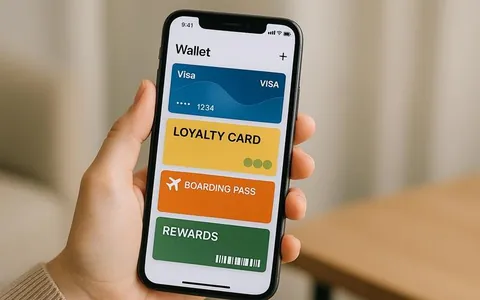
Wallet cards are a step toward more flexible and convenient work with customers. They raise engagement, cut costs and make loyalty measurable