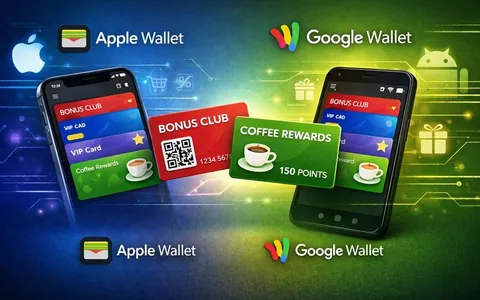
Digital cards for Apple Wallet and Google Wallet - how to launch them in one style
Digital cards for Apple Wallet and Google Wallet do the same job: give the customer a handy loyalty card on their phone


A targeted loyalty program is built on a simple idea: customers differ not only in how often they buy, but also in what they expect. One comes in regularly and responds to new items. Another shows up now and then and needs a clear reason to return. A third always buys from one category and ignores general promotions. When everyone sees the same offers, part of the budget is wasted. Over time, the loyalty program itself starts to feel like a background discount that has nothing to do with how people behave.
Targeting lets you shift the focus from mass promotions to automations you control. This is not about complex models or dozens of conditions. In practice, a few stable segments and clear reasons to reach out are enough. After that, the system grows step by step: new automations appear, thresholds get more precise, and results are measured by specific metrics, not by gut feeling.
A classic loyalty program is predictable: the same points for everyone, the same rules for redeeming, general promotions. This format is easy to launch, but it does a poor job of shaping behavior. Regular customers often get more benefits than needed to keep them, and those who have dropped out of their usual routine can't be brought back with a standard campaign.
A targeted loyalty program changes where you put your effort. An offer appears not "because there's a promotion", but because the customer is in a specific situation. The reward is no longer one-size-fits-all. It works as a response to something the customer did or didn't do. As a result, loyalty becomes a management tool, not just a part of marketing.
At the start, a small set of segments is almost always enough. They are universal and fit most industries: cafes, salons, retail, services. Only the time periods and activity thresholds differ.
New customers are the most obvious segment. The task here is simple: get the person to a second visit and build a habit. A short, clear incentive with a time limit usually works.
Active regular customers need a different approach. They rarely need an extra discount. Status levels, priority, personalized offers in their usual categories or early access to new items work much better.
Customers who come less often are in between. They still know the brand, but the habit has weakened. They need a clear, well-timed offer that brings back their interest without pressure.
Lapsed customers are the hardest group. General promotions barely work here. You need a specific, noticeable incentive, with tight cost control, so that winning them back doesn't cost more than the customer is likely to be worth.
Businesses also often create separate segments by interest in a category. This lets you raise purchase frequency within the usual items, or gently grow the basket without pushing offers that don't fit.
A targeted loyalty program doesn't need rare or complex data. In most cases, basic CRM information is enough: purchase dates and frequency, average amounts, favorite categories, responses to past offers. This data lets you build segments and launch personal automations.
What really matters is that the data updates reliably. If purchases are recorded late or the data doesn't match between systems, segments get distorted and offers go to the wrong customers. In the end, trust in the program mechanics drops, even if the logic itself is right.
In loyalty, a trigger is not a scheduled campaign but a response to an event. The customer added a card, hasn't come in for a while, reached a certain threshold, or their points are about to expire. In each case, the offer appears for a clear reason and at the right moment.
This approach feels less pushy and gets a better response. The customer sees the link between what they did and the offer. The business can measure results not in general terms but for each specific automation. This is the main difference from mass promotions, where it's hard to tell what exactly worked.
Personalization doesn't mean making things complicated. Quite the opposite: the more precise the segment, the simpler the offer should be. The formula that works is almost always the same: a clear benefit, a limited time and a clear condition for using it. When the wording is vague or has a lot of fine print, the offer loses value, even if it is personal.
One automation that leads to a clear result is better than several options the customer has to figure out. This is especially important at the point of sale, where people decide quickly.
Even a well-tuned targeted program can stop working if offers come too often. Personalization does not mean more messages. In practice, it's better to limit how often you reach out for each segment and automation. Then each offer keeps its value and doesn't fade into the background.
The right frequency depends on your industry and purchase cycle, but the rule stays the same: fewer messages at the right time are better than regular messages for no reason.
The main risk of targeted loyalty is giving benefits where they don't change behavior. So it's important to set limits in advance: redemption limits, which categories the offer covers, time limits, minimum conditions. These settings shouldn't be complex or hidden. A short description of the rules, the same everywhere, means fewer questions and conflicts at the location.
Keeping the economics under control keeps the program manageable. Loyalty starts working to grow repeat purchases and the average check, instead of turning into a constant cut to your margin.
You can only see the effect of a targeted loyalty program by comparing. Don't look at total sales. Look at changes inside segments: how many customers used the offer, how many came back within a set period, how purchase frequency and average check changed. If possible, add an analysis of gross profit.
This approach lets you separate real changes in behavior from the general background, and see which automations to expand and which to adjust or turn off.
When a customer has a digital card in their phone's wallet, the offer becomes part of everyday life. The customer sees the current benefit right on the card, without having to look for an email or message. This makes you less dependent on campaigns and makes targeting more stable. The offer updates when an event happens and is used at the moment of payment, which strengthens the link between loyalty and the purchase.
Is a targeted loyalty program right for a small business?
Yes. You can start with a few segments and a couple of automations. What matters is that purchase data gets into the CRM correctly and updates without delays.
How many segments do you need at the start?
Usually 4-6 basic segments are enough. They let you see the effect and understand where to take the system next.
Which works better: tiers or personalized offers?
It depends on the goal. Tiers are good at keeping active customers. Personalized offers work better for bringing back those who come less often. These mechanics often work well together.
How do you know an offer is too complex?
If it takes a long time to explain or has many conditions, few people will use it. In most cases, it's better to simplify.
How do you keep costs under control?
Limits, expiry dates and analyzing results by segment help. Your evaluation should look not only at revenue, but also at changes in visit frequency and profit
Digital cards for Apple Wallet and Google Wallet do the same job: give the customer a handy loyalty card on their phone
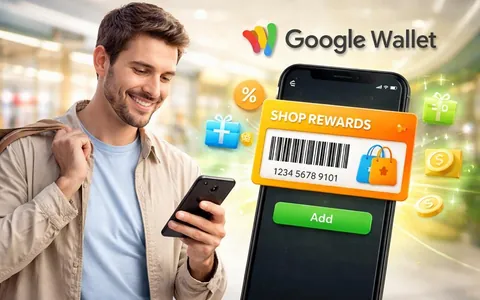
For a customer, Google Wallet is a handy place to keep cards and passes they need to show or use quickly.

A virtual points card is a loyalty program format where the customer keeps the card on their phone and shows it at checkout with a QR code or barcode