
Loyalty program for the "Beauty and health" industry
A personalized loyalty program for your business

The benefit is clear
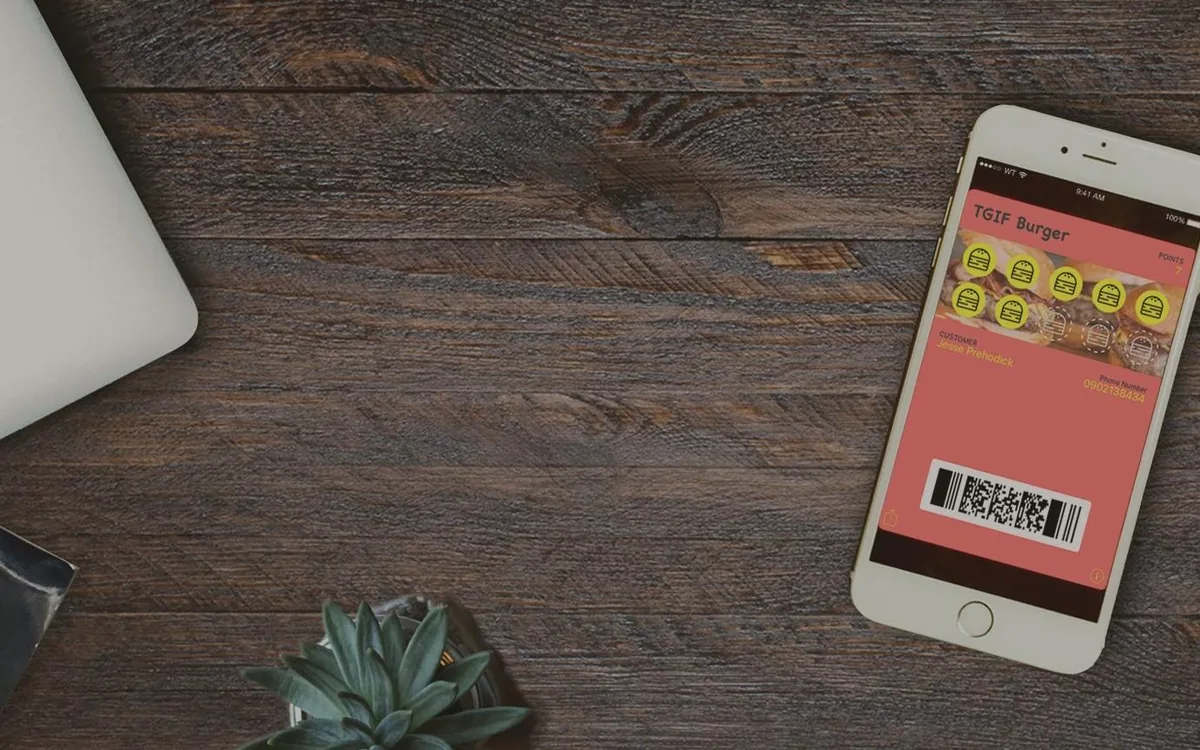
Digital loyalty cards have many advantages over the usual ways to run a loyalty program, such as mobile apps, plastic customer cards and so on. We could list these benefits for a long time, but we will focus on the most important and clear ones.
How fast digital cards spread is the first thing to look at. In fact, this is the main advantage of digital cards over plastic cards, and even more so over mobile apps.
To get a digital card, a user needs to do just two simple things: follow a link and add the card to their wallet.
You can put the link to download the card anywhere: on your website, on your social media pages, as a QR code on business cards, flyers and so on, or in SMS and email campaigns. Also, your customers who have already joined your digital loyalty program can easily send the link to their friends with the "share" button. So word of mouth works very well here. When you use all the ways to hand out digital cards together, you can give out thousands of cards a day.
You have to agree: you can't get this result with plastic cards or mobile apps. You can only give a plastic card to a customer at your location, so they have to be there in person. With mobile apps, experience shows that many customers don't download a company's app to their phone. First, any app takes up a lot of space on the phone, and not every user is ready to install lots of different apps. This makes it harder to reach your customers. Second, even after downloading an app, many people don't use it. Why? We will talk about this next.
Plastic cards. Think about how many plastic cards from different companies you have. Do you always carry them with you? Most likely, you always have two or three, maybe five, cards that you need more often than others: cards from grocery stores, pharmacies and so on. The other cards stay at home, often as "dead weight". Even when you go to that store to shop, you usually leave its card at home. Right?
Mobile apps. They are often "heavy" and slow to "load" on the phone, and you need the internet to use them. It takes a long time to open the app, and you have to do several steps to use your loyalty benefits. Also, even though the internet is now a big part of our lives, there are still places and even whole areas where the internet connection is quite poor.
A digital card is always with your customer, because it lives in their mobile phone, and today it's rare to meet someone without a smartphone. These cards work fine without internet access. At the point of sale, a location-based push notification appears. The customer taps it and can show the card right away.
All the current information is on the info side of the card, so your customer always knows their discount, their points, how long a promotion lasts and so on.
Digital loyalty cards spread fast, so you can quickly set up communications with customers, and that means you quickly collect and build up data. Cardholder data is a huge resource for any company. It lets you personalize offers, reach out to each customer directly, build a picture of your target audience, find your "typical" customer and so on. No other tool lets you collect customer data this fast and use it in your company's marketing strategy.
On iOS devices, push notifications in Apple Wallet are on by default in the factory settings. According to statistics, on average more than 85% of iPhone users leave Wallet notifications on. In mobile promo apps, the system asks the user the first time they open the app if they want to get notifications, and only about 35% of users turn on notifications for promo apps. These numbers clearly favor digital cards: in 85% of cases, you can be sure your customer will read your message.
Building a mobile app can cost several hundred thousand or even millions of rubles. But building the app is not enough. It needs constant technical support, updates and so on, and they also cost a lot of money.
Issuing plastic cards all the time is also expensive. Keep in mind that people often just lose their cards, so you have to issue cards again, not only for new customers but also for existing ones. Besides making the plastic cards, remember that entering customer data into the database constantly takes a lot of staff time, and staff time, as we know, is one of the most expensive resources. Also, all this takes a lot of time, which is another costly resource.
With digital cards, customers fill out an online form themselves. The company's staff doesn't have to do anything, and the data goes into the database automatically.
Also, implementing a digital loyalty program doesn't take much time or money. You don't need developers to run digital cards. You can change all the settings yourself in the admin portal, and it is as easy to use as an email newsletter service.
The minimum cost of the Loona.ai digital loyalty program is ₽990 a month, and with it you can issue 1,000 cards. You can also test the system completely free. For this, there is a free plan for 100 cards. The unlimited plan lets you issue any number of digital cards and costs ₽15,000 a month. The benefit is clear.
A personalized loyalty program for your business
Giving guests loyalty points cards solves one of the main marketing tasks in the restaurant business: more repeat visits.
Build long-term relationships with guests through an effective loyalty program